
Retrofit insulation in Odessa TX - an older house that holds its temperature
Hot upstairs rooms and a power bill that climbs every summer? We seal the gaps and add insulation to the house you already have.
- Service
- Retrofit insulation
- Call
- (432) 280-0033
How can you tell your house needs more insulation?
Hot rooms upstairs
If the upstairs bedrooms or the room over the garage stay hot long after sundown, heat is usually coming straight through the attic because the insulation is thin or the gaps under it were never sealed. Every summer you wait, the AC runs longer and the power bill shows it.
Drafts you can feel
A draft at an outlet, around the attic hatch or under a ceiling light usually means air is moving through gaps in the attic floor or the walls. Piling more insulation on top won't stop it, so you keep paying to heat and cool air that leaks right back out.
Thin or flattened attic insulation
If you lift the hatch and see insulation packed flat, stained, scattered or barely covering the ceiling joists, it isn't doing much anymore. Old material that got wet or filled with droppings has to be dealt with before anything new goes in, and the longer it sits, the more a small leak or a pest problem can spread.
How do you add insulation to a house that's already built?
Retrofit insulation in Odessa, TX is insulation added to a house that's already standing, most often blown across the floor of a vented attic and sometimes into empty wall cavities. With the gaps sealed first, it keeps upstairs rooms closer to where you set the thermostat and takes some of the load off your AC.
Most houses we see around Odessa already have something in the attic, just not enough, or it's flattened, patchy and thin near the edges. The city's construction packet sizes new heating and cooling equipment for a wintertime temperature of 24 degrees and a summertime temperature between 98 and 102, so an attic here works hard in both seasons. The price moves with the size of the attic, how many inches are already up there and what shape they're in, how much sealing the job needs, and whether you go with loose fill or foam. The schedule mostly turns on whether old material has to come out first and whether the job needs a permit, and the estimate lays out your options and the number for your house.
Details to note before an estimate
- Where your attic hatch is
- How many inches are up there now
- Rooms that run hot or cold
- Any new siding you're planning
How we do retrofit insulation in an existing house
In a house that's already built, we plan the air sealing, closing the gaps where air sneaks through, and the new insulation as one job, because once fresh insulation goes down, any leak underneath it is buried. First we look at what's already up there, and if old material got soaked or is full of droppings, it comes out instead of getting covered. Then we seal the openings in the attic floor around pipes, wires and the hatch with sealant or foam, and put solid blocking over big holes and open soffits. Hot flues usually get metal collars, and can lights that aren't rated for insulation contact get covers. Baffles, short channels at the eaves, go in next so the vents stay open and moisture doesn't end up in the framing. Last, we blow in loose fill, insulation blown through a hose, over the sealed floor.
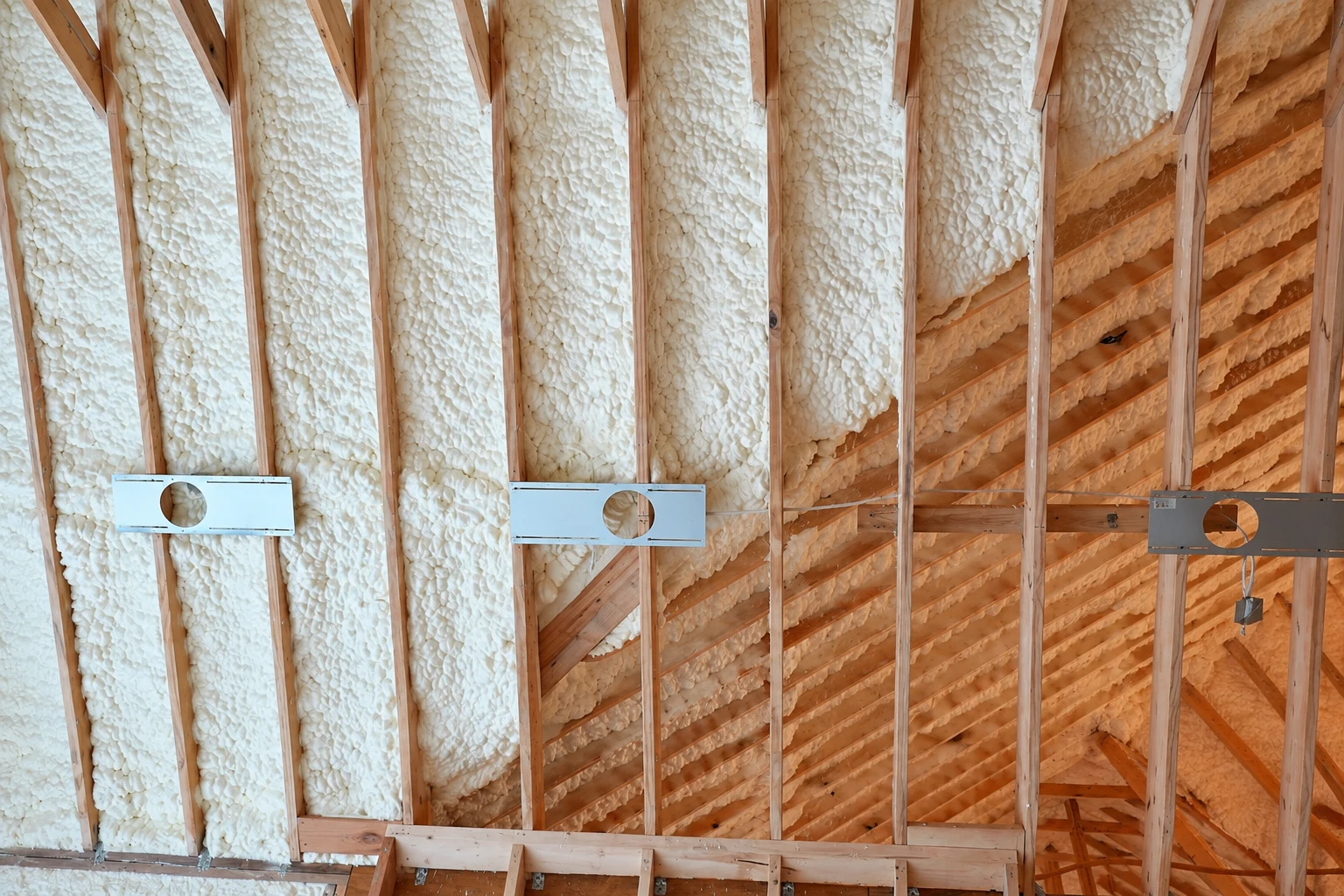
Some houses call for a different plan. When your ductwork lives in the attic, I'll price spray foam insulation alongside the loose-fill option so you can compare them side by side. If the attic is the only part of the house bothering you, our attic insulation page goes deeper on that one space.
Related insulation work
Spray foam insulation
Worth a look when your ducts run through a hot attic or you want a wall sealed and insulated in one pass.
Attic insulation
For when the attic is the main problem and you want the whole space brought up evenly, from the hatch out to the eaves.
What happens after you call about retrofit insulation in Odessa?
Call or send the form
Call (432) 280-0033 or send the form, and I'm happy to talk your house through on the phone before anyone comes out. Then we pick a time for me to come see it.
I look at it myself
I go up into the attic, and into the walls or crawl space if they're part of it, to find anything that should be fixed before we insulate. You get a written estimate that walks through your options and what each one covers, so you know what you're paying for.
Our crew does the work
If the job needs a permit, we handle it with the city or the county, and for alterations the city says to plan on an average of 3 to 10 business days from a completed application to the permit. Once we're clear to start, our crew lead runs the job with the crew, sealing first and insulating after.
We walk it with you
When the crew wraps up, we go over the finished work with you so you can see the sealing and the coverage for yourself. That's a good time to ask anything that's still on your mind.
Questions before you book retrofit insulation
How much does retrofit insulation cost in Odessa, TX?
Insulation in Odessa usually costs about $1 to $5 per square foot. That's a general figure for insulation work around here, not our quote, and where your house lands depends on what turns up once the hatch is open. Your own number comes from the estimate, and the promise is the same whatever you pick: your satisfaction, guaranteed.
Should I air seal my attic before adding insulation?
Yes. In a vented attic, sealing the openings in the attic floor comes first, because insulation slows heat but doesn't stop air pushing up through the gaps. Since someone's already working up there to add insulation, it makes sense to plan both as one job.
Is spray foam better than blown-in insulation for an older house?
Not always. Spray foam seals air and insulates a wall in one step, and installed correctly it keeps indoor moisture from condensing inside the wall, but it won't stop thermal bridging, heat slipping through the wood studs, or outdoor moisture condensing. It also costs more, so for most attics here, sealing the gaps and topping up blown-in gives you more for the money unless your ductwork runs up there.
How do I add insulation to my walls when I'm replacing siding?
Do it while the old siding is off. When siding comes off an uninsulated wood-frame wall, the guidance is to drill holes in the sheathing and blow insulation into the empty cavities before the new siding goes on, so the wall only gets opened once. Tell us your siding schedule early and we'll plan around it.
What causes upstairs rooms to stay hot after adding attic insulation?
Usually it's coverage that's deep in the middle of the attic and thin at the edges, which is backward, or air still moving through gaps nobody sealed. Blown attic insulation should be as even in depth as possible and reach all the way to the top plate, the framing along the top of the outside walls, so the whole ceiling is covered. We can usually even out a lopsided job once the gaps are sealed.
Who handles insulation permits in Odessa?
The city's Building Inspections Division issues permits and inspects construction projects for code compliance. We're licensed and insured, and if your job needs a permit, I'll tell you up front, before any work starts.
Get a written estimate for insulating your existing house
We respond within 1 business day, and I'm glad to answer questions over the phone first. Then I come out, look at the house myself and give you a free estimate in person, with no pressure and no obligation.
Explore our services and areas
Services
- Spray foam insulation
- Attic insulation
- Blown-in insulation
- Home insulation
- Insulation removal
- Crawl space insulation
- Wall insulation
- Air sealing services
- Basement insulation
- Closed-cell foam insulation
- Open-cell foam insulation
- Commercial insulation
- Crawl space vapor barrier
- Vapor barrier installation
- Attic air sealing
Talk your retrofit through before you sign
No question is too small, and you'll know what you're paying for before anyone signs anything, so call (432) 280-0033 or send the form.